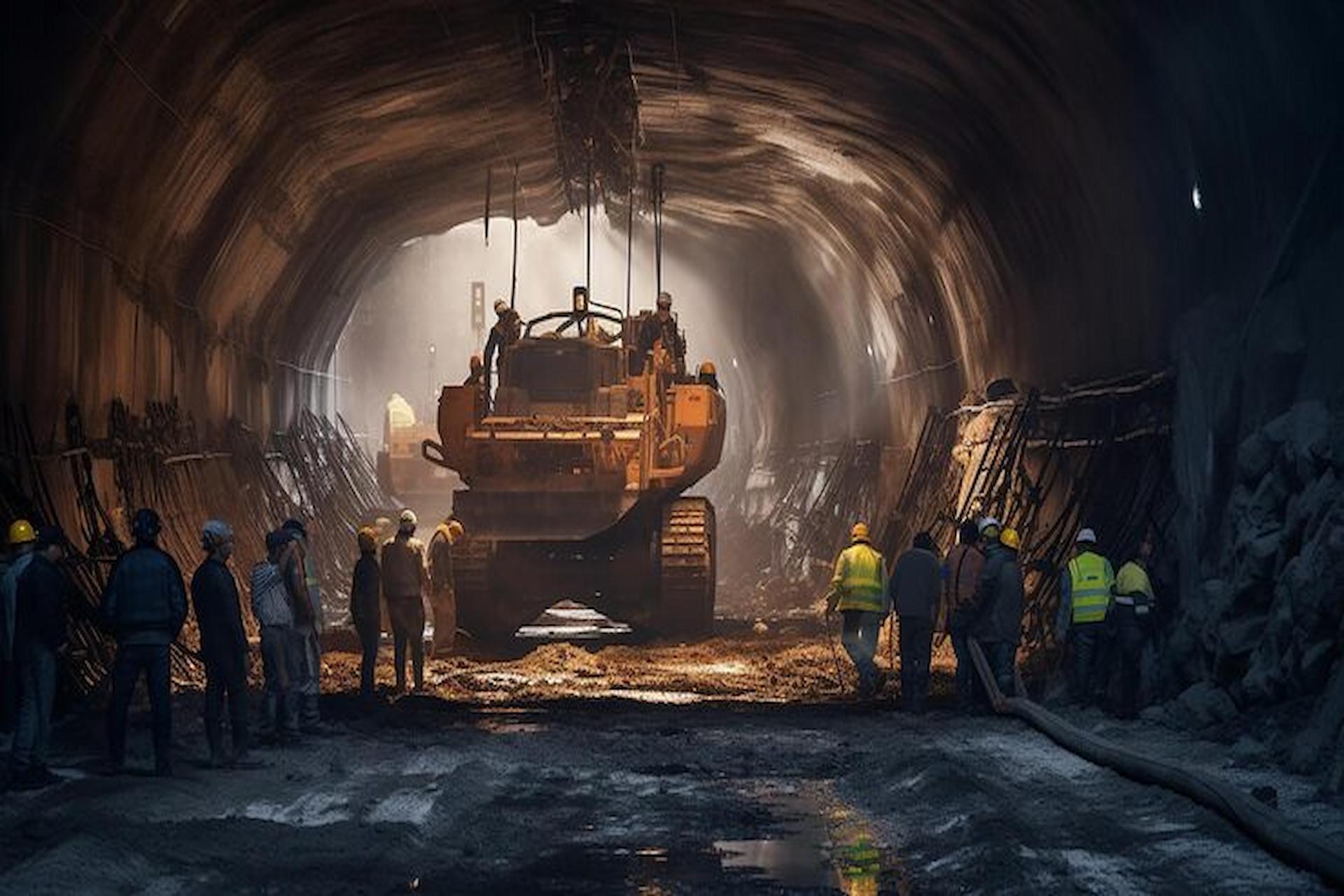
Underground mining has always been a complex and demanding industry, requiring precision, resilience, and advanced machinery to operate safely below the earth’s surface. Over the past twenty years, however, the sector has undergone a significant transformation. Driven by technological innovation, environmental considerations, and the need for improved worker safety, modern underground mining equipment looks very different from what was used in the early 2000s.
In fact, advancements in related surface technologies—such as the portable crusher plant—have also influenced how materials are processed and transported, creating a more integrated and efficient mining ecosystem. These changes have not only improved productivity but also reshaped the way mining operations are planned and executed.
The Shift Towards Automation and Digitalisation
One of the most notable developments in underground mining has been the move towards automation. Two decades ago, most operations relied heavily on manual labour and operator-controlled machinery. Today, many mines are adopting autonomous or semi-autonomous equipment.
Modern drilling rigs, loaders, and haul trucks are now equipped with sensors and software that allow them to operate with minimal human intervention. This reduces the risk of accidents and enables operations to continue in hazardous environments where human presence would be unsafe.
Digital monitoring systems also play a crucial role. Real-time data on equipment performance, ground conditions, and air quality allows operators to make informed decisions quickly. This level of visibility simply did not exist twenty years ago.
Improved Safety Standards and Equipment Design
Safety has become a central focus in mining operations, and equipment design has evolved accordingly. Earlier machinery often lacked advanced safety features, leaving workers exposed to various risks such as rock falls, poor ventilation, and equipment malfunctions.
Today’s underground mining equipment incorporates multiple safety enhancements:
- Enclosed operator cabins with climate control and noise reduction
- Advanced braking and collision avoidance systems
- Remote operation capabilities to keep workers at a safe distance
- Improved ventilation systems to manage dust and harmful gases
These improvements have significantly reduced workplace injuries and fatalities, making mining a safer profession than it once was.
The Rise of Electrification
Another major shift has been the introduction of electric-powered equipment. Traditionally, diesel engines dominated underground mining due to their reliability and power. However, they also produced emissions that affected air quality and required extensive ventilation systems.
In recent years, battery-electric vehicles (BEVs) have gained traction. These machines offer several advantages:
- Reduced emissions, leading to cleaner underground air
- Lower operating costs due to decreased fuel consumption
- Less heat generation, which reduces cooling requirements
Electrification aligns with the industry’s broader push towards sustainability, helping mining companies meet environmental regulations and reduce their carbon footprint.
Enhanced Efficiency Through Integrated Systems
Modern mining operations are increasingly interconnected. Equipment is no longer viewed in isolation but as part of a larger system designed to optimise the entire workflow.
For instance, the integration of underground machinery with surface processing tools—such as a portable crusher plant—has streamlined material handling. Ore can now be processed more efficiently, reducing the need for multiple transport stages and minimising delays.
This systems-based approach improves overall productivity while lowering operational costs. It also allows for better planning, as data from different stages of the mining process can be analysed collectively.
Key Technological Advancements in Equipment
Over the past two decades, several specific innovations have played a pivotal role in transforming underground mining equipment. These advancements have enhanced both performance and reliability.
- Smart drilling technology: Modern drills use automated controls and data feedback to optimise drilling patterns and reduce waste
- Telematics systems: Equipment can now transmit performance data in real time, enabling predictive maintenance and reducing downtime
- Compact and modular designs: Machines are designed to operate in tighter spaces while maintaining high output levels
- Energy-efficient components: Improved hydraulics and motors reduce energy consumption without compromising power
- Remote diagnostics: Technicians can identify and address issues without needing to be physically present underground
These innovations have collectively improved operational efficiency and extended the lifespan of mining equipment.
Environmental Considerations and Sustainable Practices
Environmental awareness has grown significantly over the last twenty years, influencing how mining equipment is designed and used. Companies are now expected to minimise their impact on surrounding ecosystems while maintaining productivity.
Modern equipment supports these goals in several ways:
- Reduced emissions through electric and hybrid systems
- Lower noise levels, which benefit both workers and nearby communities
- More precise extraction techniques that minimise waste
Additionally, improved material processing systems help reduce the environmental footprint by optimizing resource use and limiting unnecessary transportation.
The Role of Data and Predictive Maintenance
Data has become a valuable asset in underground mining. Equipment is now equipped with sensors that monitor everything from engine performance to structural integrity.
Predictive maintenance is one of the most impactful applications of this data. Instead of waiting for equipment to fail, operators can identify potential issues early and address them proactively. This approach offers several benefits:
- Reduced downtime and repair costs
- Increased equipment reliability
- Improved safety by preventing unexpected failures
Twenty years ago, maintenance was largely reactive. Today, it is strategic and data-driven, contributing to more efficient operations.
Challenges and Future Outlook
While the evolution of underground mining equipment has brought many benefits, it has also introduced new challenges. The adoption of advanced technologies requires significant investment and skilled personnel to manage and maintain complex systems.
However, the long-term advantages often outweigh these initial costs. As technology continues to advance, we can expect further developments in areas such as artificial intelligence, robotics, and energy efficiency.
The integration of underground and surface systems will likely become even more seamless, enabling fully optimized mining operations.
Conclusion
The past two decades have seen remarkable progress in underground mining equipment. From automation and electrification to enhanced safety features and data-driven operations, the industry has embraced innovation to address its most pressing challenges.
These advancements have not only improved productivity but also made mining safer and more sustainable. As technology continues to evolve, the future of underground mining looks increasingly efficient, interconnected, and environmentally responsible.
For businesses and professionals in the sector, staying informed about these developments is essential. The tools and systems used today, ranging from advanced drilling rigs to integrated material processing solutions, are shaping a new era of mining that prioritizes both performance and responsibility.
