Fire safety systems are only effective if they perform when they’re needed most. While alarms, extinguishers and emergency lighting often receive regular attention, one of the most important life safety systems in a commercial building is frequently overlooked: the fire damper.
Installed within heating, ventilation and air conditioning (HVAC) ductwork, fire dampers help prevent the spread of fire and smoke between compartments. However, because they are hidden above ceilings or within service risers, they can remain untested for years.
Regular fire damper inspections help ensure these critical devices remain operational, protecting occupants, limiting fire spread and supporting compliance with UK fire safety legislation.
What Is a Fire Damper Inspection?
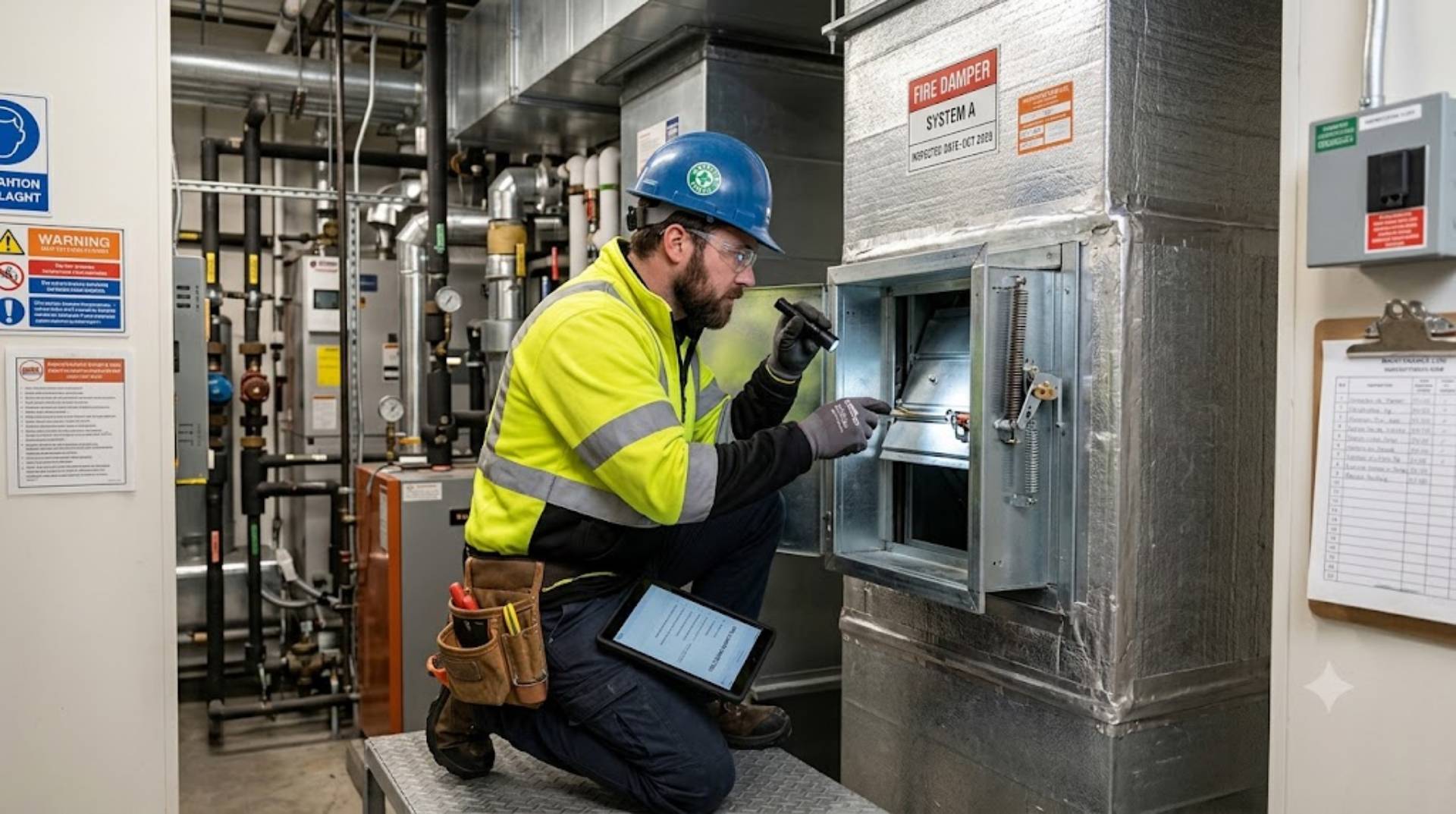
A fire damper inspection is a thorough assessment of each fire damper within a building to confirm it is installed correctly, remains accessible and operates as intended.
During an inspection, a competent engineer will typically:
- Locate each fire damper
- Confirm its identification and location
- Check accessibility
- Test the damper’s operation
- Inspect for corrosion, damage or obstruction
- Reset the damper after testing
- Record findings with photographic evidence
- Identify any remedial works required
A professional inspection provides building owners and facilities managers with documented evidence that their fire dampers have been assessed in accordance with recognised industry guidance.
Why Fire Damper Inspections Are Essential
Fire dampers form part of a building’s passive fire protection strategy. Their purpose is to maintain fire compartmentation by closing automatically when exposed to heat, preventing flames and smoke from travelling through ventilation systems.
If a damper has seized, been incorrectly installed or cannot fully close, the effectiveness of the building’s compartmentation may be compromised.
Routine inspections help identify issues before they become significant risks, allowing remedial works to be completed before an emergency occurs.
Understanding Your Legal Responsibilities
Under the Regulatory Reform (Fire Safety) Order 2005, the Responsible Person has a legal duty to ensure fire safety measures are maintained in an efficient state, efficient working order and good repair.
Fire dampers fall within this requirement.
Industry guidance, including BS 9999, recommends that fire dampers should generally be inspected and tested every 12 months, although higher-risk environments such as hospitals may require more frequent inspections.
Maintaining accurate inspection records also demonstrates due diligence during fire risk assessments, audits and insurance reviews.
Common Problems Identified During Fire Damper Inspections
Although every building is different, inspectors regularly encounter similar issues.
Common defects include:
- Dampers that fail to close completely
- Corrosion affecting moving components
- Damaged or missing fusible links
- Obstructions preventing operation
- Dampers hidden behind ceilings or walls without access panels
- Poor installation affecting performance
- Missing identification labels
- Lack of previous inspection records
Many of these issues remain unnoticed until an inspection is carried out.
Why Competence Matters
Fire damper inspection is a specialist discipline requiring technical knowledge, suitable access equipment and an understanding of passive fire protection systems.
Competent contractors should work in accordance with recognised guidance and provide comprehensive documentation following each inspection.
Reports should typically include:
- Asset registers
- Photographic evidence
- Inspection outcomes
- Pass or fail status
- Recommended remedial actions
- Accessibility issues
- Compliance records
Detailed reporting provides facilities managers with a clear understanding of their building’s current level of compliance.
The Risks of Delaying Fire Damper Inspections
Delaying inspections can expose organisations to significant risks beyond legal compliance.
Potential consequences include:
- Increased fire spread
- Greater risk to occupants
- Enforcement action by fire authorities
- Insurance complications
- Costly remedial works
- Business interruption
- Damage to organisational reputation
A planned inspection programme is generally far more cost-effective than responding to failures identified during enforcement action or following a fire.
Fire Damper Inspections Support Long-Term Compliance
Fire safety should be viewed as an ongoing process rather than a one-off exercise.
By incorporating regular fire damper inspections into planned maintenance schedules, organisations can maintain accurate records, identify emerging issues early and demonstrate continuous compliance with UK fire safety requirements.
This proactive approach not only protects buildings and occupants but also provides reassurance to insurers, auditors and enforcing authorities.
Choosing the Right Fire Damper Inspection Provider
When selecting a contractor, organisations should look beyond price alone.
Consider whether the provider offers:
- Experienced, competent engineers
- Nationwide coverage if managing multiple sites
- Detailed photographic reports
- Digital asset registers
- Clear remedial recommendations
- Compliance documentation
- Experience across sectors such as healthcare, education, commercial offices and hospitality
A comprehensive inspection should provide more than a pass or fail result. It should give building owners the information they need to effectively manage ongoing compliance.
Final Thoughts
Fire dampers are one of the most important, yet least visible, fire safety systems within a building. Without regular inspection and testing, there is no guarantee they will operate correctly in an emergency.
For Responsible Persons, facilities managers and building owners, implementing a structured fire damper inspection programme is an essential part of protecting people, preserving property and meeting legal responsibilities.
By working with experienced specialists and maintaining accurate inspection records, organisations can strengthen their fire safety strategy while reducing risk and demonstrating compliance with confidence.
